Why Is My Dental Implant Crown Loose? Causes, Treatment & Prevention
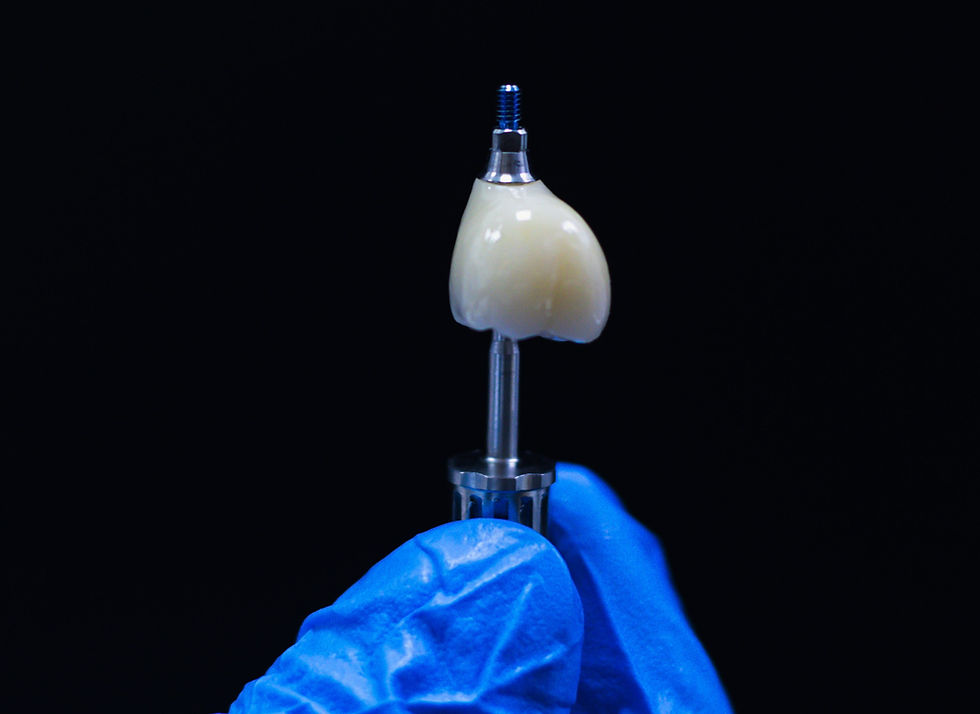
If your dental implant crown feels loose, don't panic. In many cases, the implant itself is still healthy, and the problem can often be corrected with a relatively simple procedure. However, a loose implant crown should never be ignored, as delaying treatment may lead to additional complications.
When a patient experiences a loose implant crown, it is important to determine whether the issue is a prosthetic problem or a surgical problem, says Dr. Hamid Shafie, a best-selling author of two textbooks on implant prosthodontics who practices in Washington, D.C.
Signs That Your Implant Crown May Be Loose
Patients commonly report one or more of the following symptoms:
The crown feels like it moves or rocks when chewing.
A clicking sensation when biting.
Food frequently gets trapped around the implant.
Discomfort or pain while chewing.
The bite suddenly feels different.
The implant crown feels unstable.
It is important to remember that a loose crown does not always mean the dental implant itself has failed. Only a thorough clinical examination and X-rays can determine the actual cause.
Prosthetic Reasons
1. The retaining screw has become loose.
The retaining screw connecting the crown to the implant has become loose. This typically happens when the dentist does not use a torque driver to tighten the screw to the manufacturer's recommended insertion torque. If a dentist only finger-tightens the retaining screw, the risk of loosening is very high. Additionally, using knock-off or incorrect screws significantly increases the chances of screw loosening.
2. Non-authentic implant components
Whenever a dentist or dental laboratory technician uses non-authentic prosthetic parts instead of original manufacturer components, the risk of a loose crown increases substantially.
3. Cement failure
If the crown is cemented to the implant abutment, the issue may stem from the dentist using the wrong cement or an incorrect cementation technique. This can lead to cement breakdown or cause the cement to dissolve in saliva.
4. Uneven bite
An uneven bite that applies excessive force to the implant crown can also cause it to loosen over time.
Surgical Reasons
1. Incomplete osseointegration
A loose sensation can also occur if the implant crown is fabricated before the bone has fully attached to the surface of the implant, a condition known as incomplete osseointegration.
2. Bone loss around the implant
Furthermore, excessive bone loss around the implant can lead to total implant failure. When this happens, there is no longer a stable foundation to support the crown, causing it to feel loose to the patient.
How Is a Loose Implant Crown Treated?
The treatment depends entirely on the underlying cause.
If the retaining screw has loosened, the crown can often be removed and the screw properly tightened or replaced if necessary.
If the problem is caused by cement failure, the crown may simply need to be cleaned and recemented using the appropriate dental cement.
If the bite is placing excessive pressure on the implant, your dentist may recommend adjusting your bite to eliminate excessive forces.
However, if the implant has failed because of significant bone loss or incomplete osseointegration, additional treatment, including implant replacement, may be necessary.
A proper diagnosis is essential before any treatment is performed.
Could a Loose Implant Crown Be a Sign of a Bigger Problem?
Although many loose implant crowns are caused by a simple prosthetic issue, they can sometimes be an early warning sign of a more significant dental implant complication.
Conditions such as peri-implantitis (infection around the implant), progressive bone loss, implant instability, or implant failure can all cause an implant restoration to feel loose. Determining whether the problem is limited to the crown or involves the implant itself requires a comprehensive clinical examination and X-rays.
If your implant feels loose, uncomfortable, or has changed over time, it is important to have it evaluated as soon as possible. Early diagnosis often allows problems to be treated before they become more complex.
To learn more about the different types of dental implant complications and available treatment options, visit our comprehensive guide to dental implant problems.
How to Prevent a Loose Implant Crown
To prevent most prosthetic problems, it is critical to ask your dentist whether the dental laboratory uses authentic prosthetic parts. Additionally, scheduling a dental checkup twice a year and obtaining an annual X-ray are vital for properly assessing the health of the supporting bone structure around your implant.
Routine maintenance allows your dentist to detect small problems before they become major complications.
Frequently Asked Questions
Can a loose implant crown be tightened?
Yes. If the problem is simply a loose retaining screw, the crown can often be removed and the screw tightened to the manufacturer's recommended torque.
Is a loose implant crown an emergency?
While it may not always require immediate emergency treatment, it should be evaluated as soon as possible. Continuing to chew on a loose crown can increase the risk of additional damage.
Does a loose crown mean my implant has failed?
No. In many cases, only the crown or retaining screw is loose while the implant itself remains healthy. A clinical examination and X-rays are needed to determine the exact cause.
Can I continue eating if my implant crown is loose?
It is best to avoid chewing on the affected side until your dentist evaluates the implant, as additional forces may worsen the problem.
Expert Care for Loose Implant Crowns in Washington, D.C.
If you are experiencing problems with your dental implant, schedule a consultation with Dr. Hamid Shafie, a leading implant prosthodontics expert in Washington, D.C.
As the author of two internationally recognized textbooks on implant prosthodontics, Dr. Shafie has extensive experience diagnosing and treating complex implant complications, including loose implant crowns, implant failures, and prosthetic complications.
Early diagnosis can often prevent a minor problem from becoming a major one.
To schedule an appointment, call Vitality Teeth at 202-925-6210.


Comments